When people hear the words ABA therapy, they often imagine something very clinical.
Programs.
Data sheets.
Repetition.
And yes, those things exist.
But they’re not the part families remember.
They’re not the part children respond to.
So one day, we asked our team a simple question.
“ABA, in one word.”
The answers came quickly.
Connection.
Hope.
Purpose.
Understanding.
If you want to see those answers from our team, you can watch the first video here.
And those words reveal something important about what ABA really feels like inside a therapy room. ✨
The science matters.
But the relationship is what brings it to life.
The First Thing Children Learn Is Not a Skill 🧩
When a child begins therapy, something important happens before any program starts.
Before goals, data and new skills.
A relationship begins.
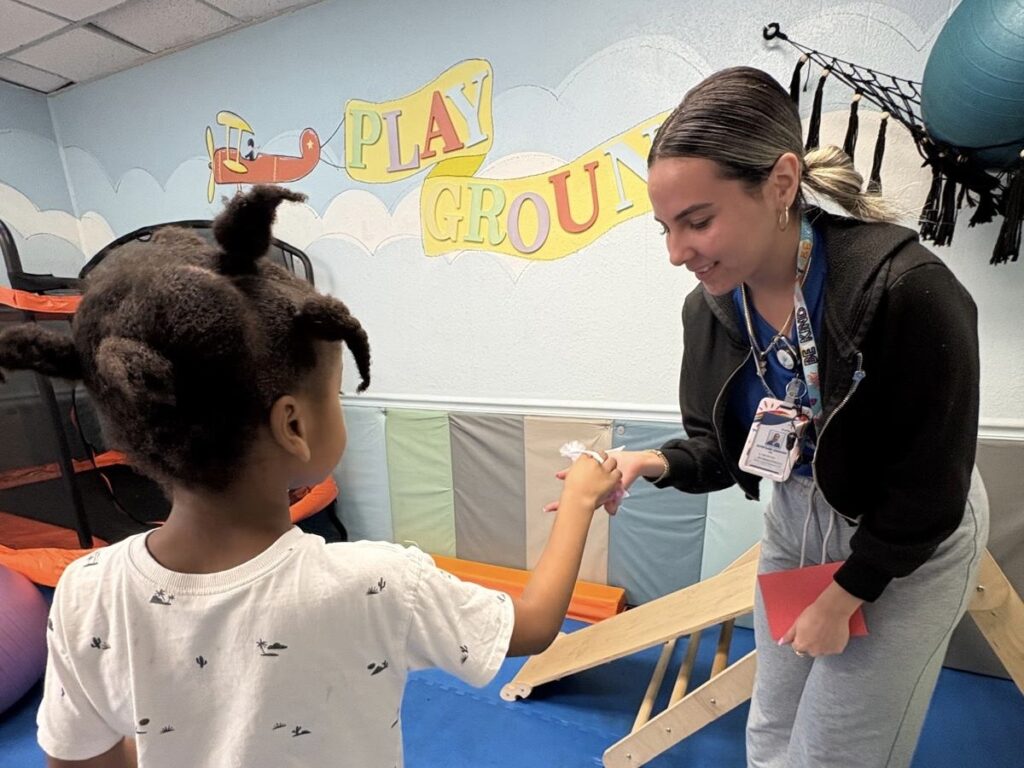
If you walked into our center during the first weeks, you might see a therapist sitting on the floor with a child.
Playing with dinosaurs.
Building with blocks.
Laughing during a game.
To someone outside the room, it might look like simple play.
But those moments are where trust is built.
And trust is what makes learning possible. 💙
The Word Our Team Repeated Most: Connection
When our therapists answered the question “ABA in one word”, one word kept appearing.
Connection.
Children don’t learn from people they don’t trust.
They learn from people who feel safe.
That connection is what allows a child to:
try something new
accept help
share attention
communicate needs
Without connection, therapy feels like pressure.
With connection, learning feels possible. 💎
The Small Moments That Change Everything ✨
Parents sometimes expect progress to look dramatic.
But inside therapy rooms, progress often begins quietly.
A child brings a toy to their therapist, or laughs during an activity, or perhaps looks at someone to share a moment.
Those small interactions are not random.
They are the early building blocks of communication.
We talk about this more in the second video from the series here.
For many families, those small moments are when something shifts.
Hope starts to feel real. 💙
ABA Is Not About Control
Another question we sometimes hear is whether ABA is about controlling behavior.
The honest answer is no.
Good ABA is about understanding behavior.
When a child is overwhelmed, frustrated, or melting down, the goal is not to control the moment.
The goal is to understand what the child is communicating.
Are they overwhelmed?
Confused?
Trying to escape something that feels too hard?
Once we understand the reason behind a behavior, we can teach a better tool.
That’s where real progress begins. 🧩
The Words That Describe This Work Best 💙
In the final part of the series, we asked our team a different question.
“What does working here feel like?”
Their answers were simple.
Grateful.
Purpose.
Family.
Home.
You can see those responses here.
Because behind every therapy session, there are people who genuinely care about the children they work with every day.
And children feel that.
That’s the part of ABA that doesn’t always appear on a program sheet, but makes all the difference. ✨
What This Means for Families
If you are exploring ABA therapy for your child, here is something important to remember.
The goal is not to change who your child is.
The goal is to give them tools that help them communicate, connect, and move through the world with more confidence.
And that journey always starts the same way.
With connection. 💙
If You Want to Learn More About Our Approach
If you want to better understand what compassionate ABA looks like in practice, these resources may help.
You can read ABA Therapy With Compassion Feels Like This, or explore Small Wins, Big Impact to see how small steps build meaningful progress over time.
If you’d like to learn more about how we support families at Super Kids, you can contact our team here.
Together, we make it better! ✨